
Generator Sizing Guide

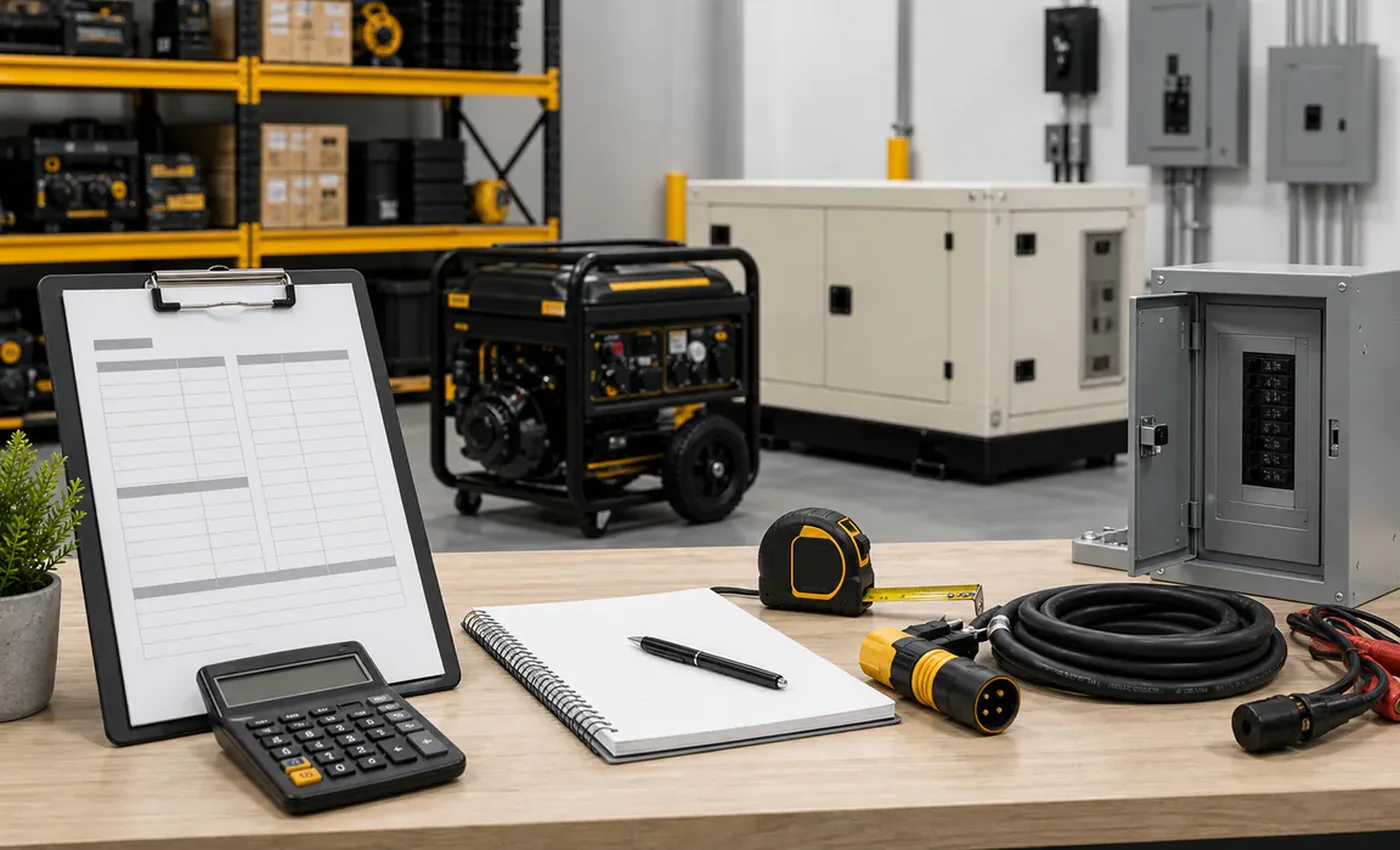
Choosing generator equipment starts with one practical question: what needs to keep running when normal utility power is not available? The right answer depends on the equipment being powered, how long it must run, whether the application is temporary or permanent, and whether the generator will be connected through a transfer switch. This guide is written for buyers comparing portable generators, inverter generators, diesel generators, standby generators, transfer switches, and generator accessories before ordering.
Generator sizing is not only about the biggest number on the product page. Buyers need to understand running watts, starting watts, voltage, phase, fuel type, load priority, and connection method. A generator that is too small may trip breakers, fail to start motor-driven equipment, or leave critical loads unsupported. A generator that is much larger than the actual load may cost more, use more fuel, and be less efficient for the work required.
Start With the Loads You Need to Power
Begin by making a list of the equipment, tools, appliances, lights, controls, pumps, chargers, HVAC components, compressors, or shop systems that must operate. Separate the list into required loads and optional loads. Required loads are the items that must work during an outage or on a jobsite. Optional loads can be left off, sequenced manually, or powered only when enough generator capacity is available.
Most electrical equipment has a running load, which is the power needed after the item is operating. Motor-driven loads may also have a starting load, sometimes called surge load or inrush current. Air compressors, pumps, refrigerators, lift motors, fans, and some power tools can draw substantially more power for a short time when starting. When multiple motor loads start at the same time, the generator must be able to handle the combined demand.
Running Watts vs Starting Watts
Running watts are the continuous power requirement. Starting watts are the short burst needed by some equipment when it turns on. For example, a small tool may have a modest running requirement, while a compressor or pump may briefly demand much more. If the generator cannot handle starting watts, the equipment may not start properly even if the running wattage looks acceptable.
When estimating power, add the running watts for the loads that will operate at the same time. Then identify the largest starting load that may begin while the other loads are already running. A common planning method is to add total running watts plus the largest additional starting requirement. This is only a planning method, not a substitute for manufacturer specifications or an electrician’s review.
Portable Generators
Portable generators are useful for jobsites, mobile work, temporary power, outdoor operations, and backup support where a permanently installed system is not required. They are often selected for flexibility because they can be moved, stored, and deployed when needed. Buyers should compare wattage, outlet configuration, fuel type, runtime, noise level if provided, and whether the generator is suitable for the loads being powered.
Portable generators are commonly used for tools, battery chargers, lights, pumps, temporary office equipment, and selected emergency loads. They may require manual connection and manual load management. If a portable generator will connect to a building electrical system, the connection should be planned with a properly installed transfer switch or approved interlock system. Direct backfeeding is unsafe and should not be used.
Inverter Generators
Inverter generators are often chosen when cleaner power output, lighter-duty portability, and quieter operation are important. Many buyers compare inverter generators for electronics, RV use, mobile service, events, lighter backup needs, and smaller temporary power requirements. They are not automatically the right choice for every commercial application, but they can be useful when stable power and compact size matter.
When comparing inverter generators, look at running watts, starting watts, outlets, parallel capability if offered, fuel type, runtime, and whether the generator can support the exact loads you intend to run. Sensitive electronics, battery charging equipment, and portable tools may have different requirements than large motor-driven equipment. Always review the listed specifications before purchase.
Diesel Generators
Diesel generators are commonly used for commercial, industrial, agricultural, construction, and larger jobsite applications. Diesel equipment is often selected where heavier duty cycles, large loads, longer operating periods, or site fuel practices make diesel a practical option. Diesel generators can support demanding loads, but buyers still need to review voltage, phase, power rating, fuel capacity, enclosure type, emissions requirements, and installation needs.
Commercial buyers should also consider how the generator will be delivered, placed, fueled, maintained, and connected. A diesel generator may require space planning, ventilation, grounding, service access, and coordination with qualified electrical professionals. If the generator will support a facility, the transfer equipment and load management plan are just as important as the generator itself.
Standby Generators
Standby generators are typically installed for homes, businesses, offices, shops, healthcare support areas, properties, and commercial buildings that need backup power when utility power is lost. Standby systems are commonly paired with automatic transfer switches so selected loads can transfer from utility power to generator power after an outage.
Standby generator buyers should compare fuel type, capacity, voltage, phase, enclosure, transfer switch compatibility, installation requirements, local code requirements, and the loads that must be supported. A standby system should be sized with the help of a qualified installer or electrician, especially when HVAC, pumps, compressors, commercial equipment, or whole-building loads are involved.
Transfer Switches and Generator Integration
A transfer switch controls how power transfers between utility power and generator power. It helps prevent unsafe backfeeding and allows generator power to serve selected circuits or loads. Transfer switches may be manual or automatic, service-rated or non-service-rated, single phase or three phase, and sized by amperage and system voltage.
Generator compatibility matters. The transfer switch must match the electrical system and the generator application. Buyers should review amperage, pole count, voltage, phase, enclosure rating, service rating, and whether the switch is intended for the planned generator type. If compatibility is not clear, contact support or a qualified electrical professional before purchase.
How to Estimate Power Requirements
Use a written worksheet before shopping. List each load, its running watts or amperage, its starting requirement if applicable, and whether it must run continuously. If a device lists amps instead of watts, watts can often be estimated by multiplying volts by amps for a basic single-phase load. Three-phase calculations and motor loads are more complex and should be reviewed by a qualified professional when accuracy matters.
Basic Planning Steps
- Identify required loads and optional loads.
- Record running watts for every load that may operate at the same time.
- Identify motor loads with starting or surge requirements.
- Add total running watts plus the largest expected starting load.
- Confirm voltage, phase, outlet, plug, and transfer-switch requirements.
- Leave room for real-world conditions, but avoid buying far more generator than needed.
Common Generator Sizing Mistakes
Ignoring Starting Loads
Many buyers add running watts but forget starting loads. This is a common reason a generator appears large enough on paper but fails to start a compressor, pump, or motor-driven tool.
Trying to Power Everything at Once
Backup power planning works best when loads are prioritized. A smaller generator may work well when nonessential equipment is turned off or started in sequence. Trying to run every load at once can force buyers into a larger system than necessary.
Overlooking Voltage and Phase
Wattage is not the only specification. A generator must match the voltage and phase required by the equipment or electrical system. Single-phase and three-phase applications are not interchangeable without proper equipment and design.
Forgetting Transfer Equipment
A generator used with a building electrical system needs proper transfer equipment. The transfer switch, wiring, protection, and installation plan should be reviewed before ordering.
Assuming All Generators Fit All Applications
Portable, inverter, diesel, and standby generators serve different needs. Compare the product category, fuel type, output, connection method, and application before purchase.
Generator Buying Checklist
- What loads must be powered?
- What are the running and starting watt requirements?
- Is the application portable, jobsite, commercial, residential, or standby?
- What voltage and phase are required?
- Will a transfer switch be used?
- What fuel type makes sense for the location?
- Are installation, ventilation, grounding, and local code requirements understood?
- Is support needed for compatibility before ordering?
FAQ
Can I size a generator by adding every appliance or tool I own?
You can create a full inventory, but the practical sizing number should focus on loads that must run at the same time. Optional loads can often be managed manually or sequenced.
Do I need a transfer switch?
If the generator will connect to a building electrical system, a properly selected and installed transfer switch or approved transfer method is important for safety and code compliance.
Should I buy the largest generator I can afford?
Not always. Oversizing can increase cost and fuel use. Match the generator to the required loads, starting demand, fuel plan, and application.
Steel Haul Equipment provides category navigation, visible SKUs, product data, and support references so buyers can compare generator equipment before ordering. For compatibility questions, use the product name or SKU when contacting support.