
Transfer Switch Buying Guide

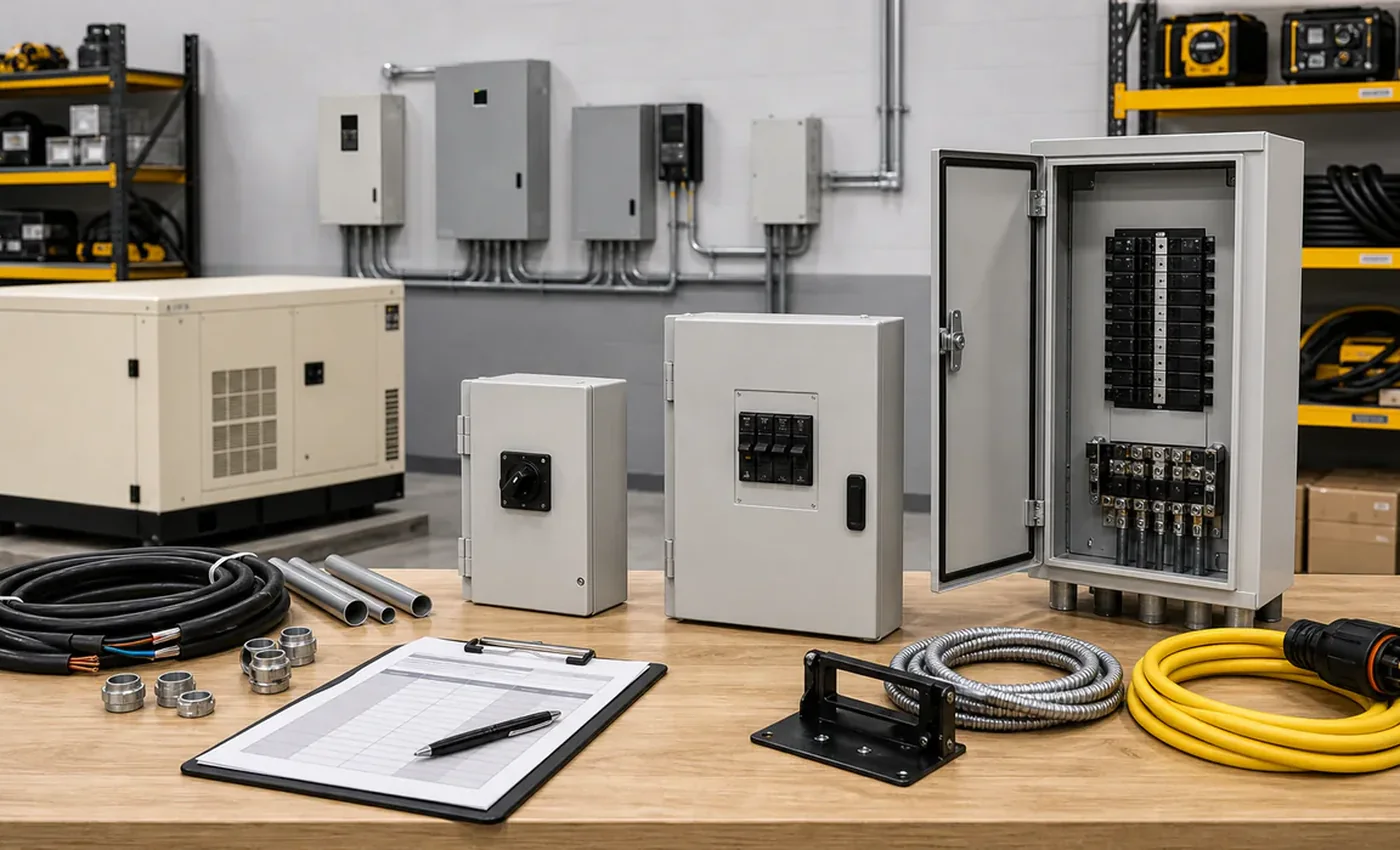
A transfer switch is one of the most important parts of a generator system. It controls how electrical loads move between utility power and generator power, helps prevent unsafe backfeeding, and gives the generator a defined way to support selected circuits or equipment. Buyers comparing transfer switches should look beyond amperage alone and review phase, voltage, pole configuration, service rating, enclosure type, transfer method, and generator compatibility.
This guide is written for customers planning backup power for homes, commercial buildings, shops, jobsite support, agricultural operations, and facility equipment. It does not replace an electrician or local code review, but it explains the main buying considerations before selecting a switch.
What a Transfer Switch Does
A transfer switch connects selected electrical loads to one of two power sources. Under normal conditions, utility power supplies the load. During an outage or planned transfer, the switch allows generator power to supply the load. The transfer switch is designed so the generator does not backfeed the utility system, which can be dangerous for utility workers, equipment, and building occupants.
Transfer switches may support a small group of circuits, a subpanel, a specific piece of equipment, or a larger electrical service. The right design depends on the building, generator, utility service, and loads being supported.
Manual vs Automatic Transfer Switches
Manual Transfer Switches
A manual transfer switch requires someone to operate the switch. Manual switches are often used with portable generator setups, smaller backup systems, shops, and properties where a person can start the generator and move the load to generator power. They can be practical when automatic operation is not required.
Manual systems may cost less and can be simpler, but they require human action during an outage. Buyers should consider who will be present, whether the generator must be started manually, and how quickly backup power is needed.
Automatic Transfer Switches
An automatic transfer switch, often called an ATS, monitors power and can transfer loads to generator power after utility power is lost. Automatic switches are commonly paired with standby generators for homes, commercial properties, healthcare support spaces, offices, shops, and facilities where unattended backup power is important.
An ATS must be compatible with the generator controls and the electrical system. Buyers should review the switch rating, voltage, phase, poles, service rating, enclosure, and control compatibility before ordering.
Single Phase vs Three Phase
Electrical phase is a core selection point. Single-phase power is common in many residential and light commercial applications. Three-phase power is common in commercial, industrial, agricultural, and larger facility environments. A transfer switch must match the electrical system it serves.
Do not assume a switch can be used across phase types. A single-phase switch is not the same as a three-phase switch. The generator output, transfer switch, building service, and load requirements must align. If phase requirements are unclear, review the electrical service with a qualified professional before ordering.
Voltage, Amperage, and Pole Count
Transfer switches are commonly described by amperage, voltage, phase, and pole count. The amperage rating should match the application and electrical design. Voltage must match the system. Pole count relates to how conductors are switched, and the correct choice depends on the service and equipment design.
Service-rated switches may be used in certain applications as service equipment, while non-service-rated switches are used downstream of service disconnecting equipment. This distinction matters for installation and code compliance. Product pages should be reviewed carefully, and installation professionals should confirm the correct switch type.
Generator Compatibility
Compatibility is not automatic. A transfer switch may be intended for certain generator families, control types, voltages, phases, or applications. When comparing a switch, confirm whether it is suitable for the generator model, whether the control wiring is compatible, and whether the generator output matches the building or equipment load.
Customers buying both a generator and a transfer switch should compare the system as a whole. The generator must be able to support the selected loads, and the switch must be rated for the electrical system. If the product page does not show enough information, contact support with the product name and SKU before ordering.
Installation Considerations
Transfer switch installation should be handled by qualified electrical professionals. Installation may involve utility coordination, permits, service equipment review, grounding, conductor sizing, overcurrent protection, generator location, and local code requirements. The switch enclosure should also match the installation environment. Indoor and outdoor locations may require different enclosure ratings.
Large generators and commercial switchgear may also require space planning, delivery coordination, and service access. Before ordering, confirm where the switch will be mounted, how it will connect to the generator, and whether the building service has room for the installation.
Manual Load Management
Not every generator system supports every load at once. Some systems use load management to prioritize essential circuits. Manual systems may require the customer to turn loads on and off. Automatic systems may include controls that manage selected loads. Review the generator capacity and transfer switch plan together so the backup system supports the correct equipment.
Service-Rated vs Non-Service-Rated Switches
Service rating is another important buying point. A service-rated transfer switch may be designed to serve as service equipment in certain installations, while a non-service-rated switch is typically installed after existing service disconnecting equipment. The correct choice depends on the electrical layout, utility service, code requirements, and installer plan. This is not a cosmetic feature; it changes how the switch may be used in the system.
Before ordering, buyers should identify whether the transfer switch will be connected at the main service, downstream of another disconnect, or as part of a selected-load panel. If the product page does not clearly show service-rating information, the safest next step is to ask support or the installer to confirm the requirement using the product SKU and electrical system details.
Enclosure and Location Planning
Transfer switches are installed in real environments, and the enclosure must match the location. Indoor mechanical rooms, garages, exterior walls, service entrances, utility areas, and commercial electrical rooms can have different exposure and clearance requirements. Outdoor installations may require an enclosure suitable for weather exposure, while indoor installations still need safe access and enough working space.
Location also affects conductor routing, generator placement, utility access, inspection, and service. A switch that looks correct by amperage may still be wrong if the enclosure, mounting location, or access requirements do not fit the project. Plan the complete installation path before selecting the switch.
Selected Loads vs Whole-Service Backup
Some generator systems are designed to support selected loads only, such as refrigeration, lighting, controls, pumps, security equipment, office systems, or critical shop circuits. Other systems are planned for larger service backup. The transfer switch strategy should match the load plan. Selected-load systems may help control generator size, while larger systems require more careful load calculations and professional design.
For businesses, selected-load planning can be practical because it keeps essential operations moving without requiring every circuit to operate at once. For homes, selected circuits may include refrigeration, sump pumps, lighting, communications, and limited comfort systems. In every case, load priority should be documented before the transfer equipment is selected.
Transfer Switch Buying Checklist
- Is the system manual or automatic?
- Is the electrical service single phase or three phase?
- What voltage and amperage are required?
- Is a service-rated switch required?
- What pole configuration is needed?
- Will the switch be installed indoors or outdoors?
- Is the generator compatible with the switch controls?
- What loads will be supported during an outage?
- Has a qualified installer reviewed the plan?
FAQ
Can I use any transfer switch with any generator?
No. Generator output, controls, voltage, phase, amperage, and application must be reviewed. Use the product SKU and generator model when asking for compatibility support.
Is an automatic transfer switch always better?
Not always. Automatic switches are useful for standby systems and unattended backup power. Manual switches can be practical for smaller or portable applications where a person will operate the system.
Does a transfer switch size the generator?
No. The transfer switch controls source transfer. Generator sizing still depends on the loads, starting demand, voltage, phase, and runtime needs.
Steel Haul Equipment lists transfer switches and generator products with visible pricing, SKU details, and category navigation so buyers can compare options before ordering.