
Two-Post vs Four-Post Lifts

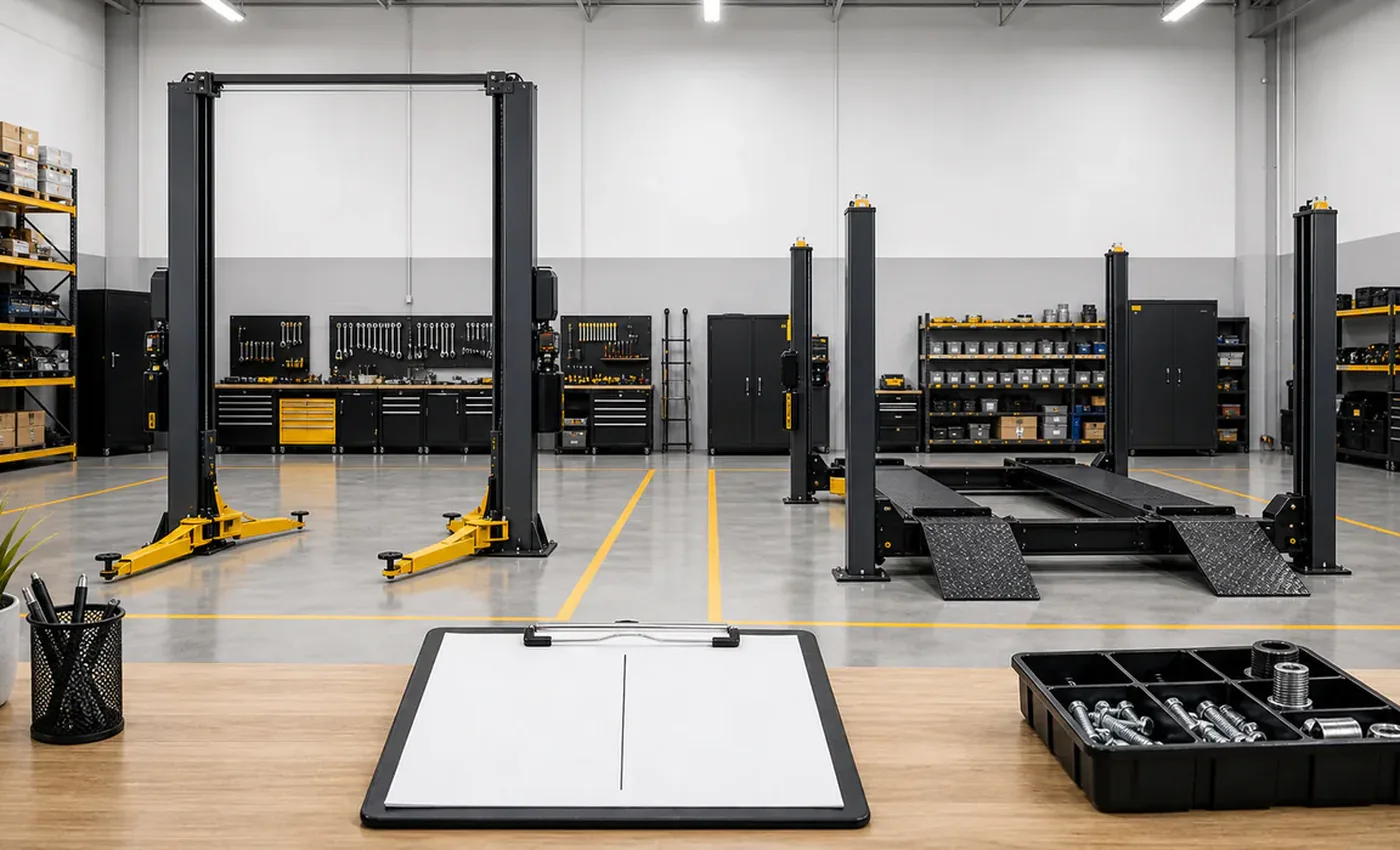
Two-post and four-post lifts are two of the most common lift styles for automotive repair shops, commercial garages, fleet maintenance, and home garage equipment buyers. Both can be valuable, but they serve different workflows. Choosing the right lift depends on the type of work being performed, the vehicles being lifted, available space, floor and ceiling conditions, storage needs, and how often the lift will be used.
This guide compares two-post lifts and four-post lifts so buyers can narrow the catalog before reviewing individual product specifications.
What Is a Two-Post Lift?
A two-post lift uses two upright columns and lift arms that contact vehicle lift points. It is commonly used for service work because the wheels hang free and the underside of the vehicle is accessible. Two-post lifts are common in professional repair bays, fleet service shops, dealerships, and many serious home garages.
Two-post lift buyers should review capacity, arm configuration, symmetric or asymmetric design, overhead or floor-plate style, ceiling height, concrete requirements, vehicle type, and installation needs. The correct lift points and adapters matter for safe use.
What Is a Four-Post Lift?
A four-post lift uses four columns and runways that the vehicle drives onto. Four-post lifts are often used for vehicle storage, inspection, light service, alignment work, fleet maintenance, and applications where drive-on convenience is important. Because the vehicle rests on its tires, access to wheels and suspension may require bridge jacks or other accessories.
Four-post lift buyers should review capacity, runway length, overall width, lifting height, approach ramps, lock positions, optional bridge jacks, alignment features if applicable, and storage requirements. Four-post lifts can be easier for some users to drive onto, but they generally require more floor space than many two-post lifts.
Service Applications
For brake work, suspension repair, tire service, exhaust work, drivetrain access, and general underside service, two-post lifts are often preferred because the wheels are free and the lift arms leave much of the underside open. A two-post lift can be efficient for daily repair operations when technicians need broad access to the vehicle.
Four-post lifts can also support service work, especially inspection, fluid service, detailing, alignment, and fleet checks. However, wheel-free work may require accessories. If a shop frequently removes wheels or works on suspension, accessory planning is important when choosing a four-post lift.
Storage Applications
For vehicle storage, four-post lifts are often the stronger choice. A four-post storage lift can allow one vehicle to be raised while another parks below, depending on ceiling height and vehicle dimensions. The drive-on design is convenient for long-term parking and collector vehicle storage.
Two-post lifts are not typically selected as the first choice for long-term storage because vehicles hang from lift points rather than resting on runways. They are service tools first. Buyers focused on parking, storage, and easy drive-on access should compare four-post lifts and car storage lift categories.
Space Requirements
Space planning is essential. A two-post lift requires enough ceiling height, floor strength, column spacing, and door-opening space. The vehicle must be positioned correctly between the columns. Shops also need room for tool carts, technicians, and vehicle movement.
A four-post lift usually has a larger footprint because of the four columns and runways. It may be easier to drive onto, but it can take up more floor area. Buyers should measure overall length, width, ramp clearance, ceiling height, and the vehicle dimensions before ordering.
Pros and Cons of Two-Post Lifts
Pros
- Strong access for service, repair, wheels, brakes, and suspension.
- Efficient for professional repair bays and daily maintenance work.
- Often uses less floor area than a comparable four-post lift.
- Good underside access when installed and used correctly.
Cons
- Requires correct vehicle positioning and lift-point contact.
- May require more attention to vehicle balance and adapter selection.
- Not usually the first choice for long-term storage.
- Installation requirements must be confirmed before purchase.
Pros and Cons of Four-Post Lifts
Pros
- Drive-on convenience for storage, inspection, and service.
- Useful for vehicle parking and long-term storage applications.
- Alignment versions can support alignment bay work.
- Good option for buyers who want stable runway support.
Cons
- Usually requires more floor space.
- Wheel-free service may require bridge jacks or accessories.
- Runways can limit access to some underside areas.
- Storage use still requires careful ceiling-height planning.
Buying Considerations
Before choosing a lift, identify the main job. If the lift will be used every day for repair work, two-post lift access may be more important. If the lift will be used for parking, storage, detailing, inspection, or alignment, a four-post lift may fit the workflow better.
Review capacity, vehicle type, wheelbase, lifting height, ceiling height, concrete requirements, installation space, accessory needs, and support requirements. Buyers should also review lift accessories, pads, adapters, bridge jacks, and power units when compatibility matters.
Home Garage vs Commercial Shop Selection
A home garage buyer may care most about ceiling height, storage, driveway access, and whether the lift leaves enough room for daily parking. A commercial shop buyer may care more about speed, repeated use, technician access, vehicle mix, and how the lift fits into the service-bay layout. The same lift style can feel very different depending on how often it is used and what vehicles it supports.
For home garages, four-post lifts are often considered when parking and storage are priorities. Two-post lifts can still be useful in home settings where repair access is the main goal, but installation requirements, concrete condition, and safe vehicle positioning must be taken seriously. For commercial shops, two-post lifts are common for repair bays, while four-post lifts often appear in alignment bays, inspection lanes, and storage or fleet-support areas.
Accessory Planning
Lift accessories can change how useful a lift is in daily work. Four-post lift buyers may need bridge jacks for wheel-free service. Two-post lift buyers may need adapters, extension kits, or specialty pads depending on vehicle lift points. Storage lift buyers may compare drip trays, casters, approach ramps, or other support items. Accessories should be selected based on the specific lift model and the vehicles being serviced.
Do not assume that an accessory fits every lift. Product families, model numbers, capacity, runway dimensions, arm design, and manufacturer requirements can affect compatibility. When fitment is not clear, use the lift SKU and accessory SKU when contacting support before purchase.
Safety and Installation Review
Both two-post and four-post lifts require responsible installation and use. Buyers should review floor requirements, anchoring, electrical needs, clearance, vehicle weight, weight distribution, lock operation, and manufacturer instructions. A professional installation review is especially important for commercial shops, older concrete slabs, low-ceiling spaces, or heavier vehicles.
Safe lift selection is not only about capacity. Vehicle length, center of gravity, lift points, technician training, shop traffic, and accessory use all matter. Choosing the right lift style helps the shop work efficiently, but safe operation depends on correct setup and regular inspection.
FAQ
Which lift is better for a repair shop?
Many repair shops prefer two-post lifts for general service because they provide wheel-free access. Four-post lifts can be better for alignment, inspection, storage, and drive-on convenience.
Which lift is better for storage?
Four-post lifts are commonly used for vehicle storage because the vehicle rests on runways and can often be parked above another vehicle when ceiling height allows.
Do I need accessories?
Possibly. Adapters, lift pads, bridge jacks, and other accessories may be needed depending on vehicle type and work performed. Confirm fitment before purchase.
Steel Haul Equipment organizes lift systems by category so buyers can compare two-post lifts, four-post lifts, alignment lifts, scissor lifts, portable lifts, bridge jacks, and accessories before ordering.