
Commercial Shop Equipment Checklist

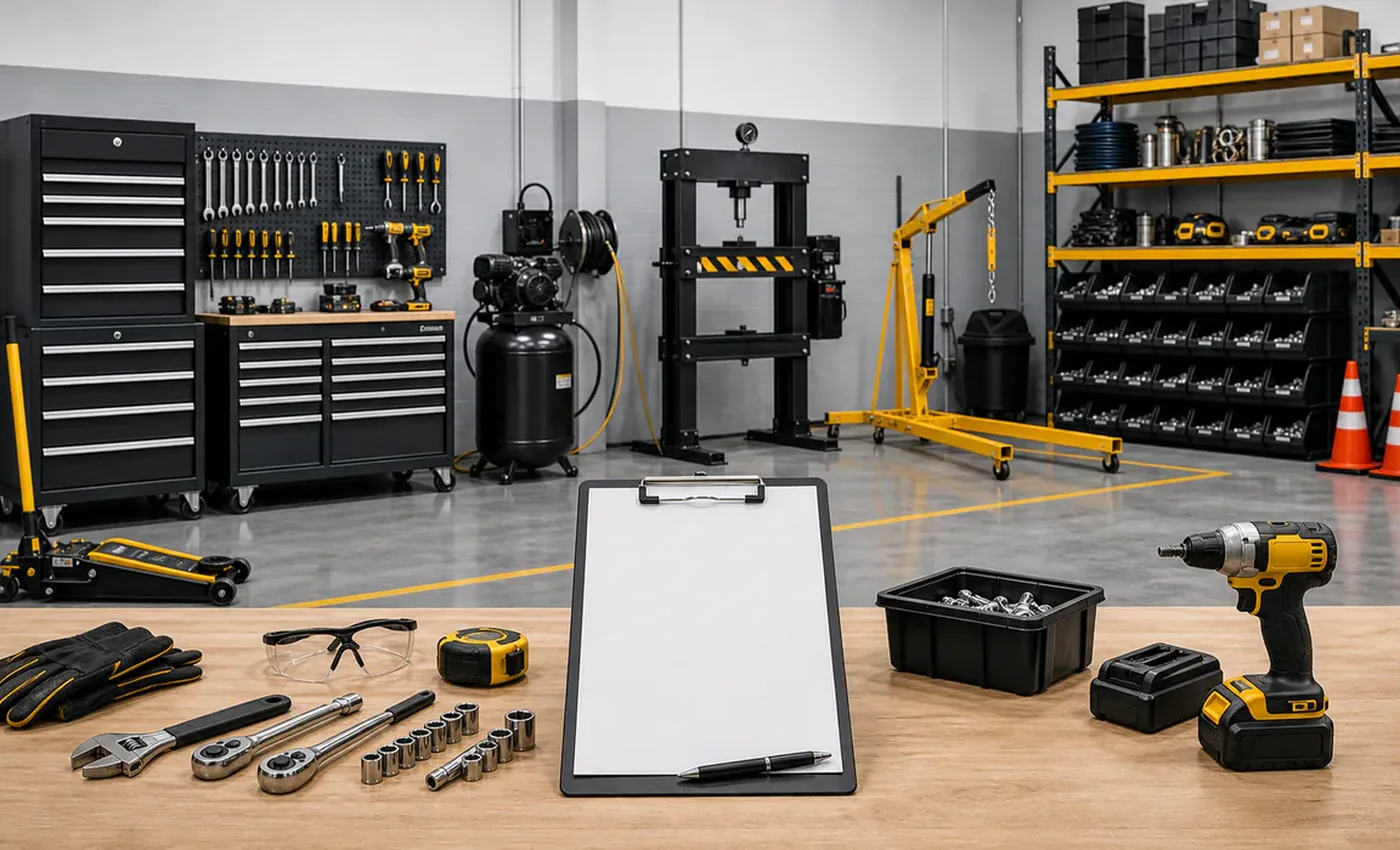
A productive commercial shop depends on more than one major machine. Lifts, tire equipment, air systems, tool storage, jacks, workbenches, shop presses, oil service tools, and daily support items all affect workflow. This checklist helps automotive repair shops, fleet maintenance teams, commercial garages, agricultural operations, and equipment buyers plan a practical shop equipment setup before ordering.
The right equipment list depends on the work being performed. A tire-focused shop will prioritize wheel service equipment. A general repair shop may need lifts, air systems, diagnostics, jacks, presses, and tool storage. A fleet facility may need durable equipment that supports repeat maintenance and larger vehicles. Use this guide as a planning framework, then compare product specifications and SKUs before purchase.
Air Compressors and Air Systems
Air compressors support many shop tasks, including air tools, inflation, cleaning, and some service equipment. Buyers should compare compressor capacity, pressure, duty cycle, tank size, electrical requirements, footprint, and the number of tools or machines that may run at the same time.
Air planning should also include hose reels, fittings, filters, regulators, dryers if needed, and safe routing. A compressor that is too small can slow work and create pressure drops. A system that is poorly routed can create clutter and trip hazards. Plan compressor location, noise, ventilation, maintenance access, and electrical service before ordering.
Tool Storage
Tool storage affects efficiency and accountability. Cabinets, tool boxes, carts, and workstations help technicians keep tools organized and reduce time spent searching. Buyers comparing tool boxes should consider drawer layout, weight capacity, locking, mobility, worktop space, and whether storage will be assigned to individual technicians or shared across the shop.
Commercial shops often benefit from a mix of stationary storage and mobile carts. Frequently used tools should be close to the work area, while specialty tools can be stored in dedicated cabinets. Good storage also supports cleaner presentation for customers and safer work areas for staff.
Jacks and Jack Stands
Floor jacks, transmission jacks, and jack stands are daily-use support equipment. Even shops with vehicle lifts still need jacks for certain tasks, positioning, support, and mobile work. Buyers should compare capacity, lift range, saddle style, handle design, mobility, and vehicle compatibility.
Jack stands and support equipment should be selected with the same seriousness as larger shop machines. Capacity and stability matter. Match the equipment to the vehicles being serviced and use support devices according to manufacturer instructions.
Tire Equipment and Wheel Service
Shops that perform tire work need tire changers, wheel balancers, wheel aligners, accessories, and service tools. The wheel service category includes equipment used for tire replacement, balancing, alignment, and brake or wheel-related service. Buyers should compare wheel size range, clamp style, assist arms, balancing capability, alignment features, and accessory needs.
Tire equipment planning should consider workflow. Where will wheels be staged? Is there room around the tire changer? Where will weights, valve stems, tools, and supplies be stored? Is compressed air available at the correct location? A good layout reduces steps and helps technicians move vehicles through the bay efficiently.
Shop Presses
Shop presses support bearing work, bushing service, straightening, forming, and general mechanical tasks. Buyers comparing shop presses should review tonnage, frame style, bed adjustment, work area, hydraulic operation, and accessory compatibility. A press should be placed where there is room to handle parts safely.
Not every shop needs the same press capacity. Light-duty mechanical work differs from heavy fleet service. Choose equipment that fits the common jobs in the shop rather than only occasional edge cases.
Workbenches and Work Areas
Workbenches support disassembly, inspection, electrical work, parts staging, and tool organization. A strong workbench can improve accuracy and reduce clutter. Buyers should consider worktop material, storage, vise mounting, lighting, power access, and location in the shop.
Good work areas are planned around tasks. Diagnostic work may need clean bench space and electrical outlets. Fabrication or heavy mechanical work may need more durable surfaces. Parts staging may need shelves, bins, and labeling. Keep walkways clear and place benches where they do not interfere with vehicle movement.
Checklist for New or Expanding Shops
- Air compressor sized for tools and equipment.
- Air hose reels, fittings, regulators, and routing plan.
- Tool storage for shared and technician-owned tools.
- Floor jacks, jack stands, and specialty jacks.
- Tire changer, wheel balancer, aligner, and wheel accessories if tire service is offered.
- Shop press matched to common mechanical work.
- Workbenches for service, diagnostics, parts, and assembly.
- Oil drains, parts washers, carts, dollies, and daily support tools.
- Electrical capacity, lighting, floor space, and safe traffic paths.
- SKU-based ordering support for compatibility questions.
Prioritize Around Workflow
Equipment should reduce steps, not create bottlenecks. A tire machine across the building from the balancer wastes time. A compressor without adequate air routing slows technicians. A lift without nearby tool storage creates extra movement. Plan the shop in zones: vehicle service, tire work, diagnostics, parts cleaning, tool storage, and customer or office support.
Daily Support Equipment
Small support items can determine whether the larger equipment works smoothly. Carts, dollies, creepers, lighting, extension cords, oil drains, parts washers, hose reels, bins, labels, and waste-handling equipment help technicians move through jobs without unnecessary delays. These items are often inexpensive compared with major machines, but poor planning can make a shop feel cluttered and inefficient.
Oil drains and fluid handling products should be planned around the services offered. Brake, coolant, oil, transmission, and differential work may each require different support equipment. Parts washers and cleaning stations should be located where they support disassembly without interfering with clean diagnostic or electrical work. Carts and dollies should match the parts and tools being moved.
Diagnostics and Electrical Work
Modern shops often need a dedicated area for diagnostics, scan tools, battery support, chargers, and electrical testing. This area should have stable work surfaces, clean storage, access to power, and enough lighting. Diagnostic work is slower when tools are scattered across service bays or mixed with heavy mechanical work.
Buyers should also think about how diagnostic tools connect with the rest of the workflow. A technician may need a scan tool, battery charger, laptop, printer, wiring diagrams, and parts lookup access during the same repair. Organizing these items reduces interruptions and helps the shop present a more professional process to customers.
Growth Planning
A shop equipment list should leave room for growth. A new repair shop may start with one or two lifts, basic air systems, jacks, tool storage, and a smaller tire setup. As services expand, the shop may add alignment equipment, additional lift bays, larger compressors, more storage, specialty tools, or dedicated generator and power-support equipment.
When planning expansion, avoid blocking future bay space with equipment that is hard to move. Keep electrical capacity, air routing, vehicle flow, and customer-facing areas in mind. Buying equipment in the right order helps the business control cost while still building a professional service environment.
FAQ
What should a new repair shop buy first?
Start with the equipment required for the services you will sell most often. Many shops prioritize lifts, air systems, jacks, tool storage, tire equipment, and diagnostic tools.
Should I buy every specialty tool immediately?
Not always. Build around frequent work first, then add specialty tools as demand becomes clear. This helps control startup cost and keeps storage organized.
How do I compare equipment online?
Use product titles, SKUs, categories, images, specifications, and pricing. If compatibility is unclear, contact support with the product name and SKU before ordering.
Steel Haul Equipment organizes shop equipment, wheel service equipment, automotive tools, lift systems, parts, and accessories so buyers can compare equipment by department before checkout.