
Diesel vs Standby Generators

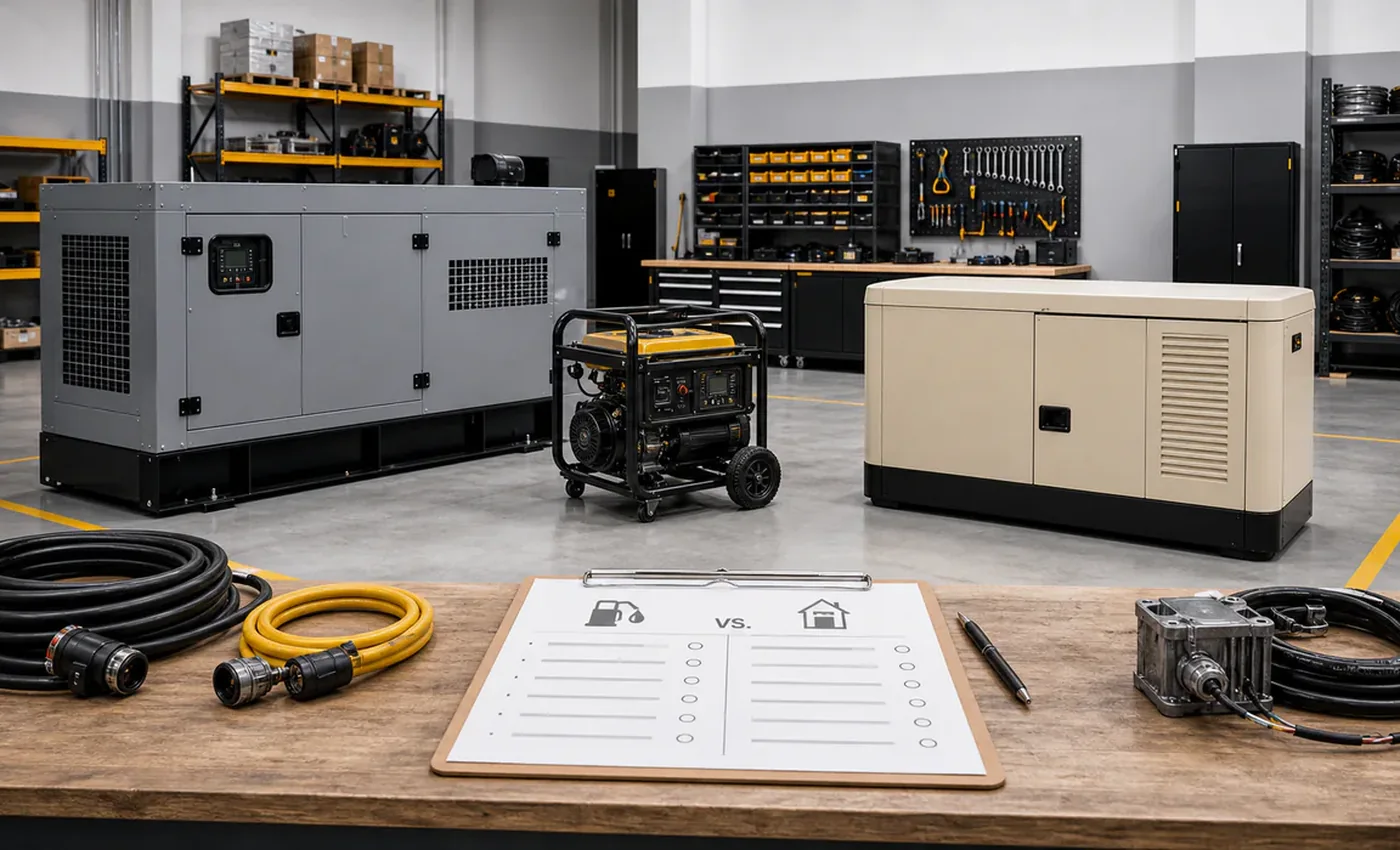
Diesel generators and standby generators can both support backup power, but they are often selected for different reasons. Diesel generators are commonly associated with commercial, industrial, agricultural, and jobsite power. Standby generators are typically installed for automatic backup power at homes, businesses, shops, and facilities. Some standby systems may use diesel fuel, but many buyers use the terms to compare mobile or commercial diesel equipment against permanently installed standby systems.
This guide explains the practical differences so customers can compare diesel generators, standby generators, transfer switches, and generator accessories before ordering.
Commercial Use
Commercial buyers often compare diesel generators because they may need higher output, durable operation, site fuel practices, trailer-mounted equipment, or power support for construction, agriculture, fleet facilities, industrial properties, and emergency operations. Diesel equipment can be useful where heavier loads and longer runtime planning are important.
Commercial standby systems are also common. Offices, shops, medical support areas, manufacturing sites, and service facilities may use standby generators to maintain selected loads during outages. A commercial standby system is usually planned with a transfer switch, load study, installation review, and maintenance schedule.
Residential Use
Residential buyers often consider standby generators for home backup power. A standby system can support selected circuits or larger home loads when paired with the right transfer switch and installation plan. Fuel type, generator capacity, local codes, noise rules, placement, and utility coordination should be reviewed before purchase.
Diesel generators may be used in some residential or property applications, especially where diesel fuel is already managed or where the application is more rural, agricultural, or commercial in nature. However, many home backup buyers compare standby systems designed for permanent installation.
Fuel Considerations
Fuel planning is one of the biggest differences between generator types. Diesel fuel is commonly used in commercial and industrial equipment, but it requires storage, handling, maintenance, and attention to fuel condition. Diesel can be practical where fuel delivery, tanks, and equipment service are already part of the operation.
Standby generators may use natural gas, propane, diesel, or other fuel types depending on the model and installation. Natural gas and propane systems can be attractive for some standby applications because fuel supply planning may be simpler than storing diesel. The right choice depends on location, utility availability, runtime expectations, cost, and local requirements.
Maintenance Considerations
All generators need maintenance. Diesel generators may require fuel system care, oil and filter service, battery checks, coolant checks where applicable, load testing, and periodic operation. Fuel quality can matter if the generator sits for long periods.
Standby generators also require scheduled maintenance, test runs, battery care, filters, oil service, transfer switch checks, and inspection of the installation area. A standby system should be maintained before outage season, not only after a problem occurs. Maintenance requirements vary by product, so review the product documentation and manufacturer guidance when available.
Typical Applications for Diesel Generators
- Construction sites and temporary jobsite power.
- Agricultural operations and remote property support.
- Commercial facilities with larger power requirements.
- Industrial sites and equipment support.
- Fleet maintenance yards and service operations.
- Emergency backup where diesel fuel logistics are already planned.
Typical Applications for Standby Generators
- Homes that need automatic backup for selected loads.
- Commercial buildings that need outage support.
- Repair shops and offices with essential systems.
- Healthcare support areas, subject to professional design and code requirements.
- Properties that need automatic transfer to generator power.
- Facilities that require predictable backup planning.
Transfer Switch Planning
Both diesel and standby generator applications may require transfer equipment. The transfer switch should match the electrical system, generator output, phase, voltage, amperage, and installation plan. Automatic transfer switches are common with standby systems. Manual or automatic transfer equipment may be used in other applications depending on the system design.
Do not choose a generator without thinking about how it will connect to the loads. The transfer method, wiring, grounding, protection, and local code requirements should be part of the buying decision.
Buying Considerations
When comparing diesel and standby generators, identify the application first. Is the generator mobile or permanently installed? Will it serve a home, shop, jobsite, commercial building, farm, fleet facility, or industrial site? Will it power selected loads or a larger system? Will it need automatic transfer? What fuel is available and practical?
Next, review wattage or kW rating, voltage, phase, fuel type, transfer switch compatibility, enclosure, runtime information if provided, dimensions, and delivery considerations. If a specification is not listed, contact support with the product name and SKU before ordering.
Portability vs Permanent Installation
One of the clearest differences is whether the generator is intended to move or stay installed. Many diesel generators used for construction, agriculture, and commercial sites are selected because they can support temporary or site-based power needs. They may be moved between locations, staged for a project, or placed where fuel and service access are practical.
Standby generators are usually planned as permanent or semi-permanent backup systems. Placement, clearances, transfer switch routing, utility access, fuel supply, noise considerations, and local requirements all influence the installation. A standby generator is often purchased as part of a system rather than as a standalone machine.
Load Priority and Runtime Planning
Diesel and standby generator buyers should decide which loads matter most. Commercial facilities may prioritize refrigeration, lighting, computers, pumps, security, doors, controls, or selected shop equipment. Residential buyers may prioritize refrigeration, HVAC components, lighting, sump pumps, communications, medical support equipment, or selected outlets. The required loads drive generator sizing and transfer switch selection.
Runtime planning also matters. A jobsite generator may need to run during work hours with refueling planned around the schedule. A standby generator may need to support outages of unknown duration. Fuel supply, maintenance intervals, load percentage, and access for service should be reviewed before purchase.
Noise, Placement, and Service Access
Generator placement affects the user experience and serviceability. Buyers should consider where the generator will sit, how close it is to occupied areas, whether ventilation is adequate, how exhaust is managed, and whether service technicians can access panels, filters, batteries, and connection points. Noise information should be reviewed when available, especially for residential or customer-facing locations.
Large equipment may also require delivery access and carrier appointment scheduling. The store-wide shipping estimate remains consistent, but the buyer should still plan the delivery location, unloading needs, and final placement before ordering oversized generator equipment.
FAQ
Is a diesel generator always commercial?
No. Diesel generators are common in commercial and jobsite applications, but the right use depends on the product and installation plan.
Is a standby generator always automatic?
Many standby systems are paired with automatic transfer switches, but buyers should confirm the generator, controls, and transfer equipment shown for the product.
Which type is better for a home?
Many residential buyers compare standby systems for automatic backup power. The best choice depends on fuel availability, required loads, installation location, and local code requirements.
Which type is better for a jobsite?
Diesel and portable generator equipment is often used for construction and jobsite power, but sizing, fuel, outlets, phase, and runtime must match the work being performed.
Steel Haul Equipment sells generator equipment, transfer switches, parts, and accessories with visible product information so buyers can compare options before checkout.
For any generator category, review the listed product data and use the SKU when asking support about compatibility, ordering, or application questions.